Alina Robu
Six fields of specialisation, one single logic: first I understand how the brain and the story of the person in front of me work, then I choose the method. Integrative psychotherapy, clinical psychology, sexology, hypnotherapy, neurofeedback and research.
I do not treat symptoms.
I work with the person who has them.
I have over twenty years of practice in clinical psychology and psychotherapy, and just as many spent trying to answer a question that comes up in every consulting room: why do I understand everything about what is happening to me, and still nothing changes?
The answer, most of the time, has nothing to do with willpower. It has to do with a nervous system that learned to work in a certain way and will not be talked out of it.
Training & qualifications
- Specialist integrative psychotherapist
- Specialist clinical psychologist
- Specialist sexologist
- Hypnotherapist
- Neurospecialist and neurofeedback therapist, certified by IFEN Germany
- PhD candidate in psychology and neuroscience
In addition
- Co-founder of the BrainMap Institute
- Trainer in neurotherapy
- Author of the Neurofeedback Plus collection
- Graduate in law and in psychology
Three things worth knowing first
Why six fields
I did not collect qualifications. Every person who walked through the door needed a piece I did not have yet: sexology, hypnotherapy, neurofeedback, research.
Psychology plus data
At the BrainMap Institute, which I co-founded, the conversation in the room sits next to the qEEG brain map. Therapy becomes measurable, not only felt.
I am a therapist first
I write books, I teach courses for parents, I publish clinical studies. The rest are instruments. The real work happens in the consulting room, with a person in front of me.
Each specialisation, with its own work
These are not six different practices. They are six ways of looking at the same person, and opening each field shows you what it concretely means, who it is for and how the work is done.
Integrative psychotherapy
One therapeutic direction, built from several schools, around the person in front of me.
Open the field 02 ◆Clinical psychology
Rigorous psychological assessment: what is actually happening, stated clearly, with a direction to follow.
Open the field 03 ❖Sexology
A space where intimacy can be talked about without shame, with explanations and with solutions.
Open the field 04 ◉Hypnotherapy
Clinical hypnosis used as an instrument inside psychotherapy: for pain, anxiety, habits and trauma.
Open the field 05 ◎Neuroscience & neurofeedback
The brain map, read correctly, and the training that changes what the map shows.
Open the field 06 ◇Research & doctorate
Clinical studies published internationally and a doctorate at the meeting point of psychology and the brain.
Open the fieldThe six fields, in one table
| Field | What it addresses | The training behind it |
|---|---|---|
| Integrative psychotherapy | Anxiety, depression, burnout, trauma, relationship patterns | Specialist integrative psychotherapist |
| Clinical psychology | Assessment, diagnosis, second opinion, direction | Specialist clinical psychologist |
| Sexology | Desire, pain, intimacy lost inside a couple | Specialist sexologist |
| Hypnotherapy | Chronic pain, phobias, smoking, sleep-onset insomnia | Hypnotherapist |
| Neuroscience & neurofeedback | ADHD, anxiety, insomnia, cognitive performance | IFEN Germany certification, trainer |
| Research & doctorate | Clinical studies, academic collaborations, training | PhD candidate in psychology and neuroscience |
Each row has its own page, with the work and the materials belonging to that field.
The table scrolls sideways.
The brain is not persuaded by arguments. It is trained, like any other function of the body. The rest, everything to do with shame, with fear and with the story, is worked on in relationship.
Seven ages, seven volumes
- 0-1 year · Year Zero
- 1-3 years · The Little Explorer
- 3-5 years · The Age of Questions (coming soon)
- 6-9 years · The School of Life (coming soon)
- 10-12 years · Before the Storm (coming soon)
- 13-16 years · The Storm (coming soon)
- 17-20 years · The Launch (coming soon)
You are raising a child.
We grow alongside you.
A series of video courses by age, in which a doctor and a psychologist explain simply what is happening in your child's brain and heart, and what you can concretely do about it today.
I take the relationship and emotion side: what happens between you and your child, how you respond, how you repair, how you stay close through every stage. Dr Alina Diana Nemes takes the brain side.
What you can do from home
Alongside the consultations at the practice, the BrainMap Institute, which I co-founded, has a series of tests and programmes you can take on your own. Some are free and give you the result on the spot; others come with a full report, for a fee.
Brain Fingerprint
2000 RONA report of over 15 pages built from your qEEG map: a portrait of your brain, read from its own electrical activity.
See ❦Intimacy Fingerprint
from 49 RON30 statements, about 5 minutes: a map of the way you draw close and love, starting from your attachment pattern and your personal erotic style.
See ✤Brain Resonance
from 297 RONA qEEG resonance report between two minds: five axes of the meeting between you and your child.
See ❖The Parenting Academy
A guide for every age, from birth until they leave home: modules, volumes and resources built on applied neuroscience.
See ♪BrainTune
from 39 RONAudio programmes calibrated on the qEEG assessments carried out in the clinic, for relaxation, focus or sleep.
See ◷The Inner Clock
from 47 RONWhy are you tired at 3 in the afternoon and wide awake at midnight? Your biological clock, in 8 minutes.
SeeI work with the mind.
She works with the body.
We have worked together for over ten years, on the same people, from two directions. She comes from medicine and from the body: Bowen therapy since 2009, homeopathy, medical hypnotherapy. I come from psychotherapy and clinical assessment.
Most of the time there is no need to choose between the two. A pain that has lasted for years and an anxiety that will not yield to arguments are often the same nervous system, seen from different angles.
A separate site, for her own practice in Brașov. It opens in a new tab, in English.
Dr Alina Diana Nemes
- Doctor, with competencies in homeopathy and medical ethics
- Accredited Bowen therapist, master level, practising since 2009
- Medical hypnotherapist
- Integrative psychotherapist
- Neurofeedback therapist
- PhD candidate in psychology
Her own practice, in Brașov
- 72 Brândușelor Street, 500392 Brașov
- 0745 295 536
What I have written so far
Books are my way of answering, once, the questions I hear dozens of times a month in the consulting room.
Neurofeedback Plus
The collection in which the method of brain training is explained for the person who needs it rather than for the specialist who applies it: what the electrical activity of the brain is, what can be seen on a qEEG map and how a brain network is trained. Published in Romanian.
See it in the shop BookThe Balanced Brain Guide
A practical guide to regulation: sleep, attention, emotions and stress, with the neurophysiological explanation behind every recommendation. Written for anyone who wants to understand, not just to tick boxes. Published in Romanian.
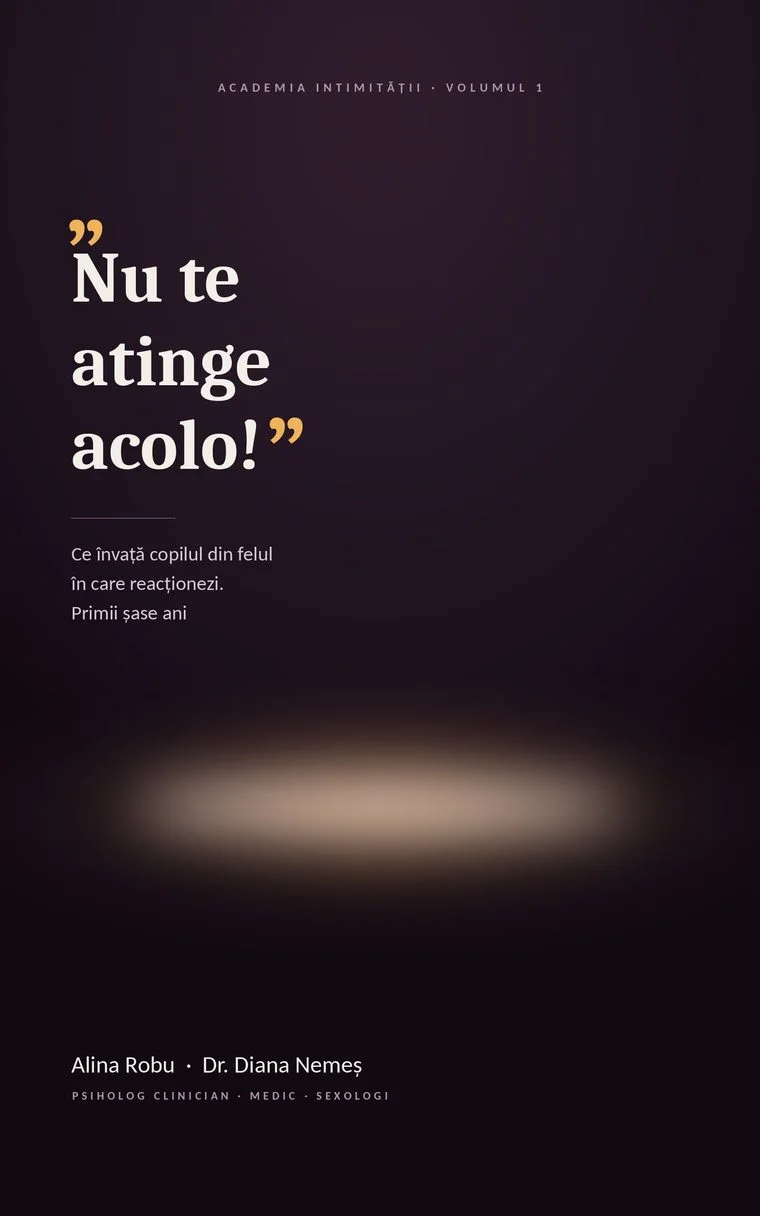
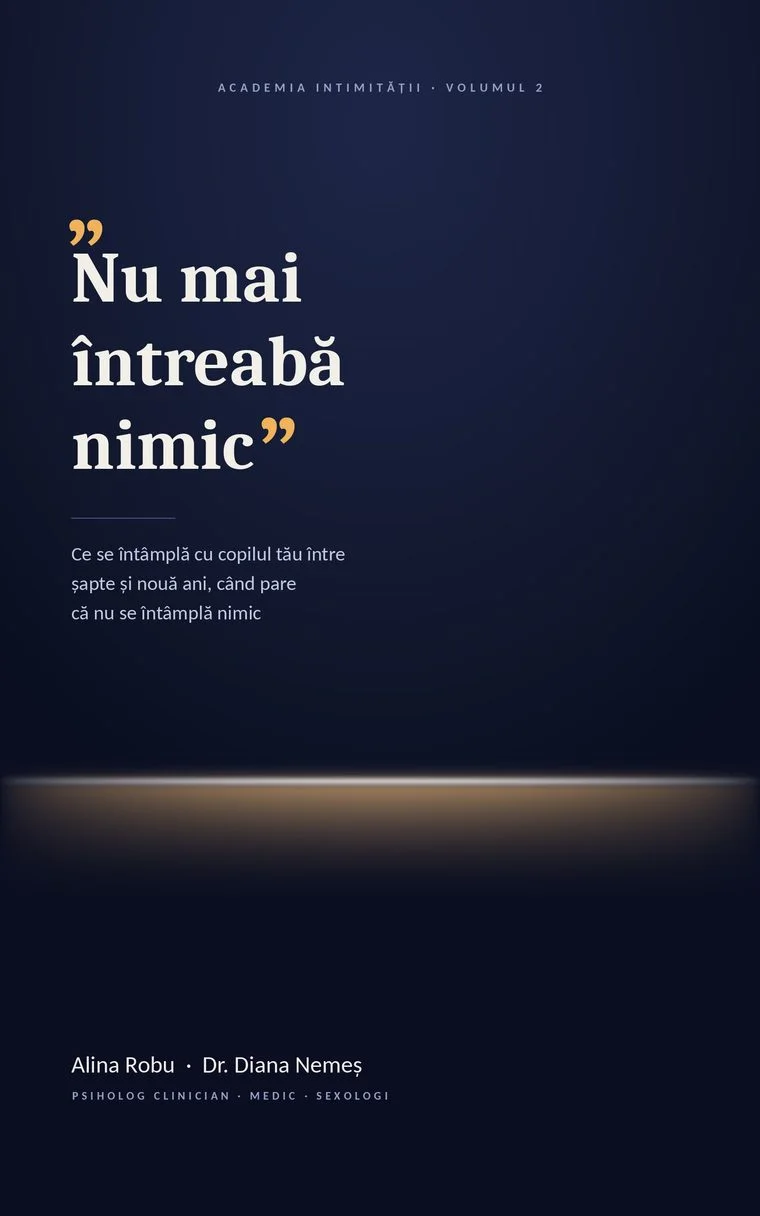
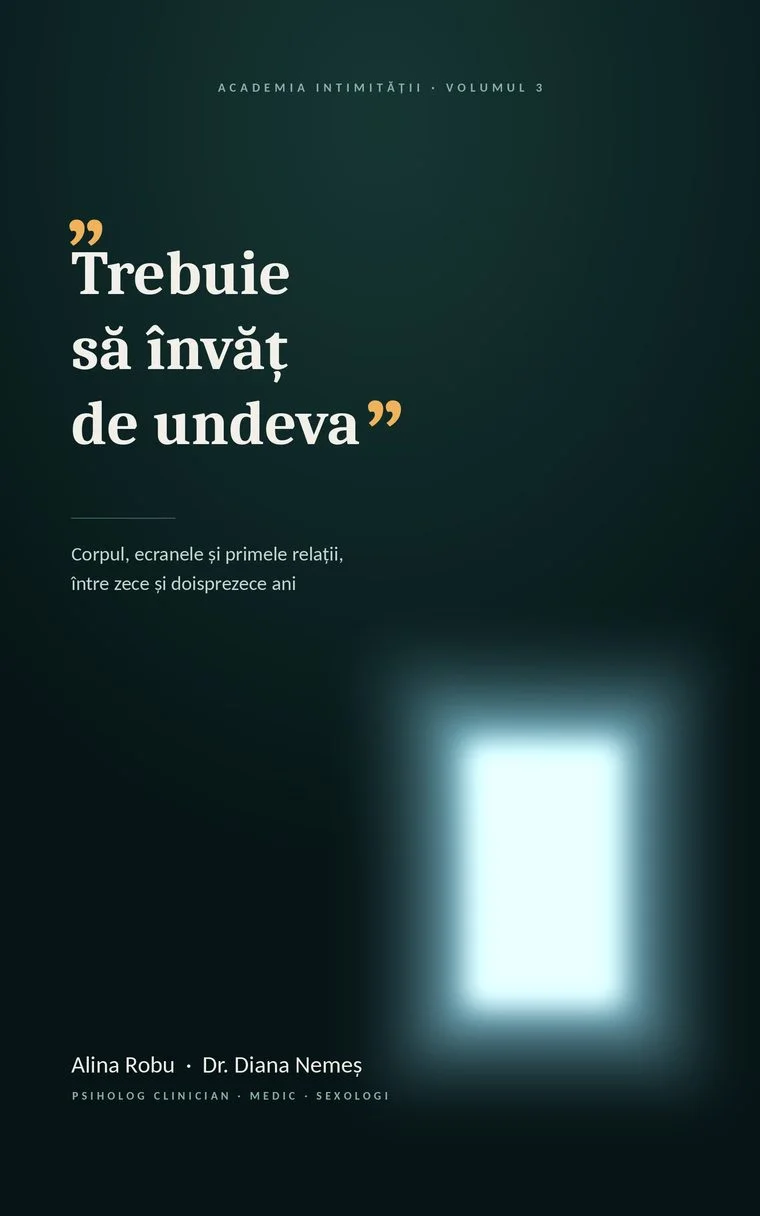
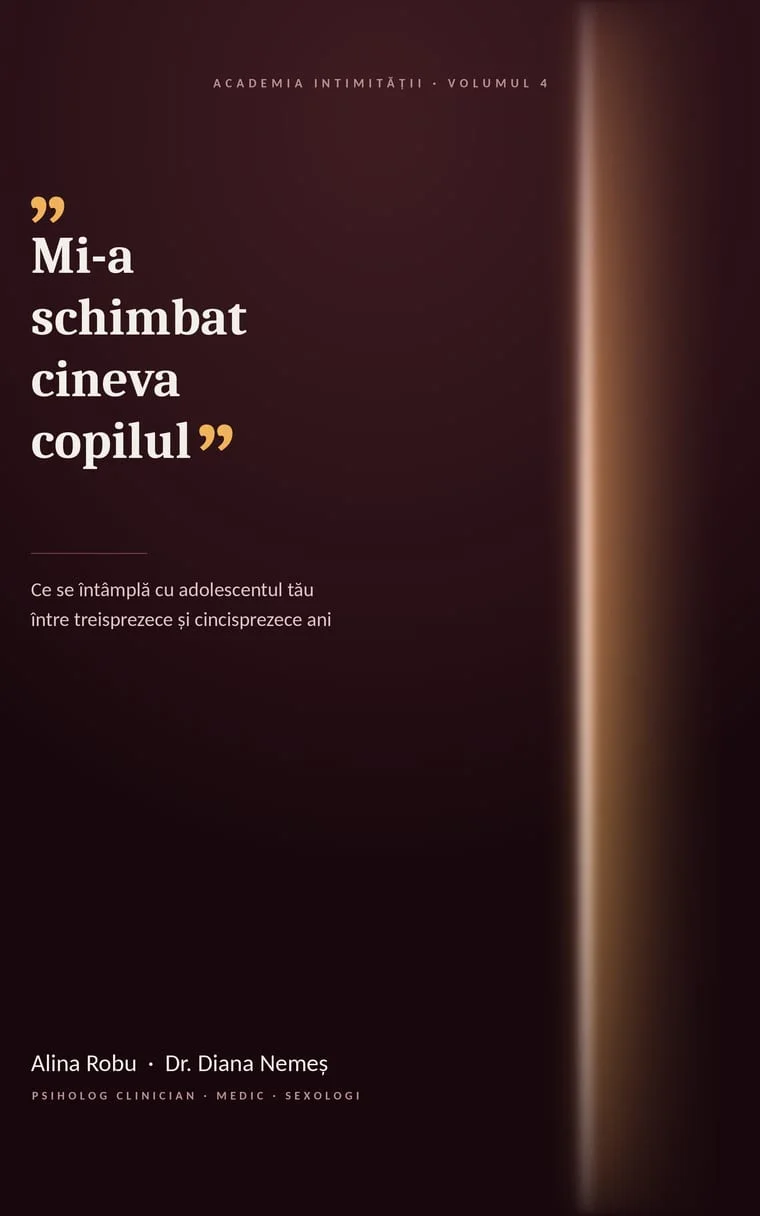
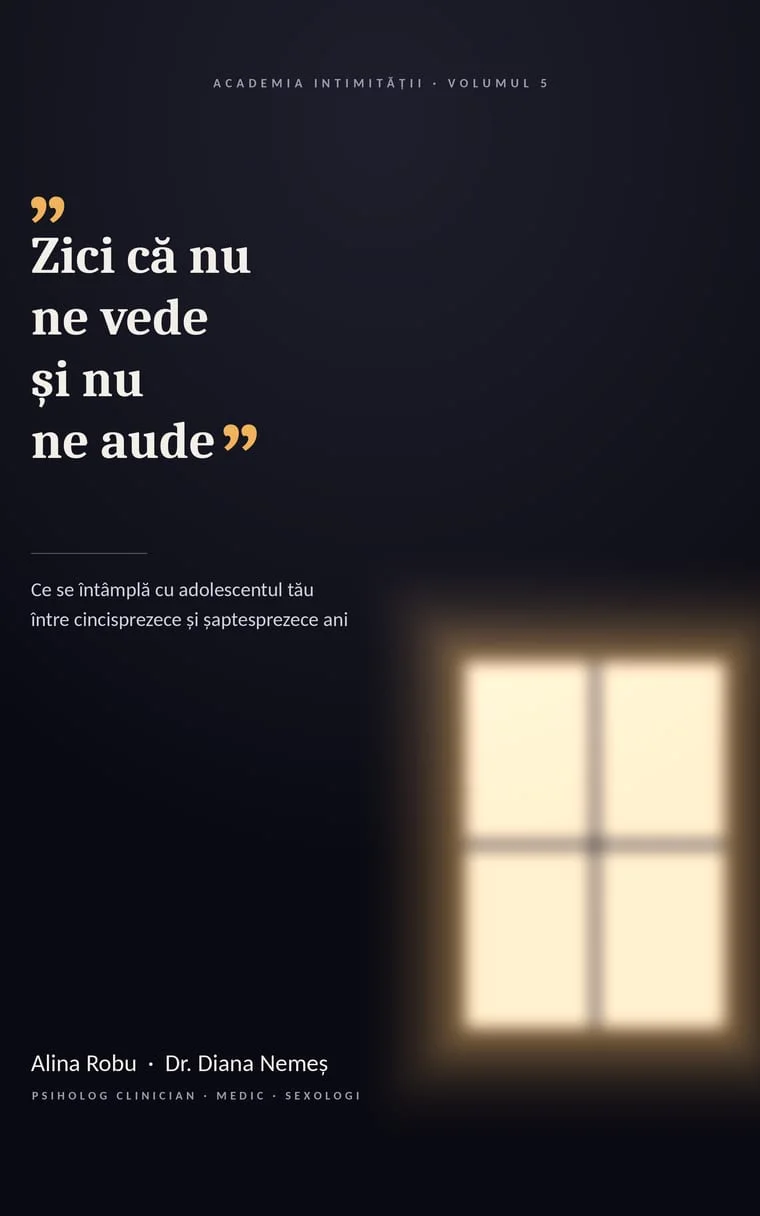
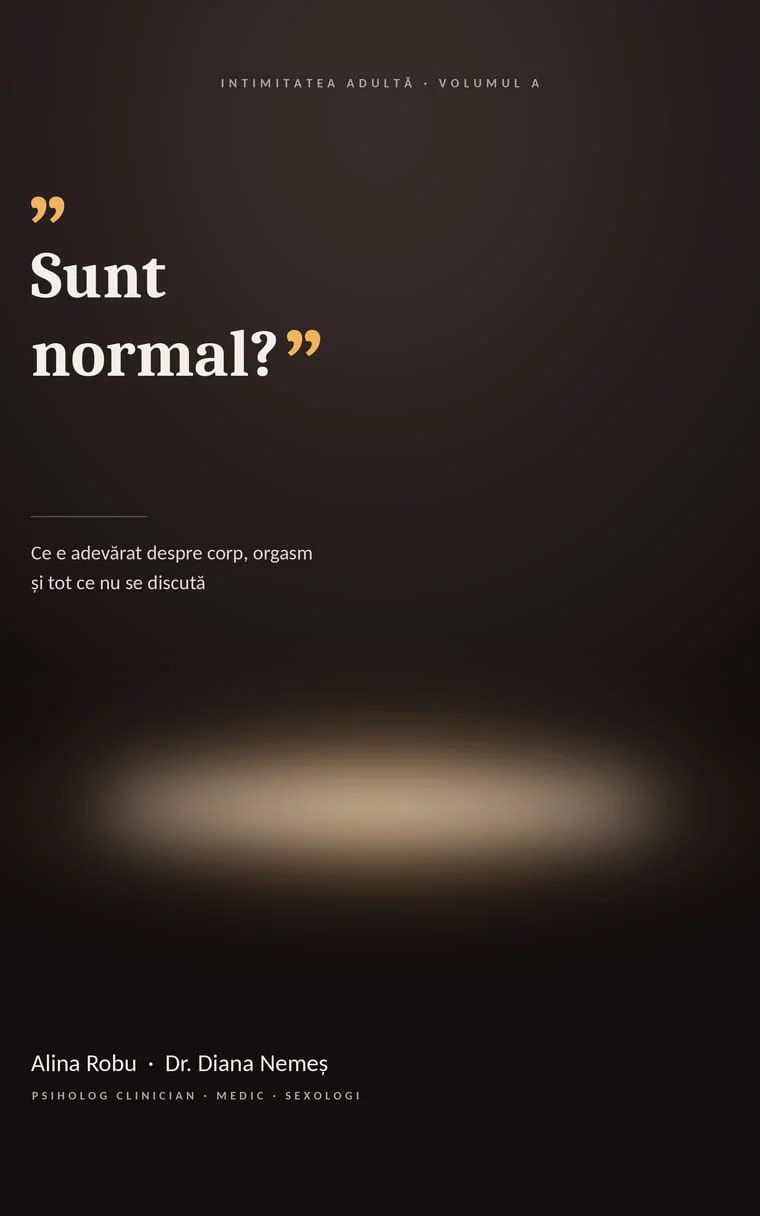
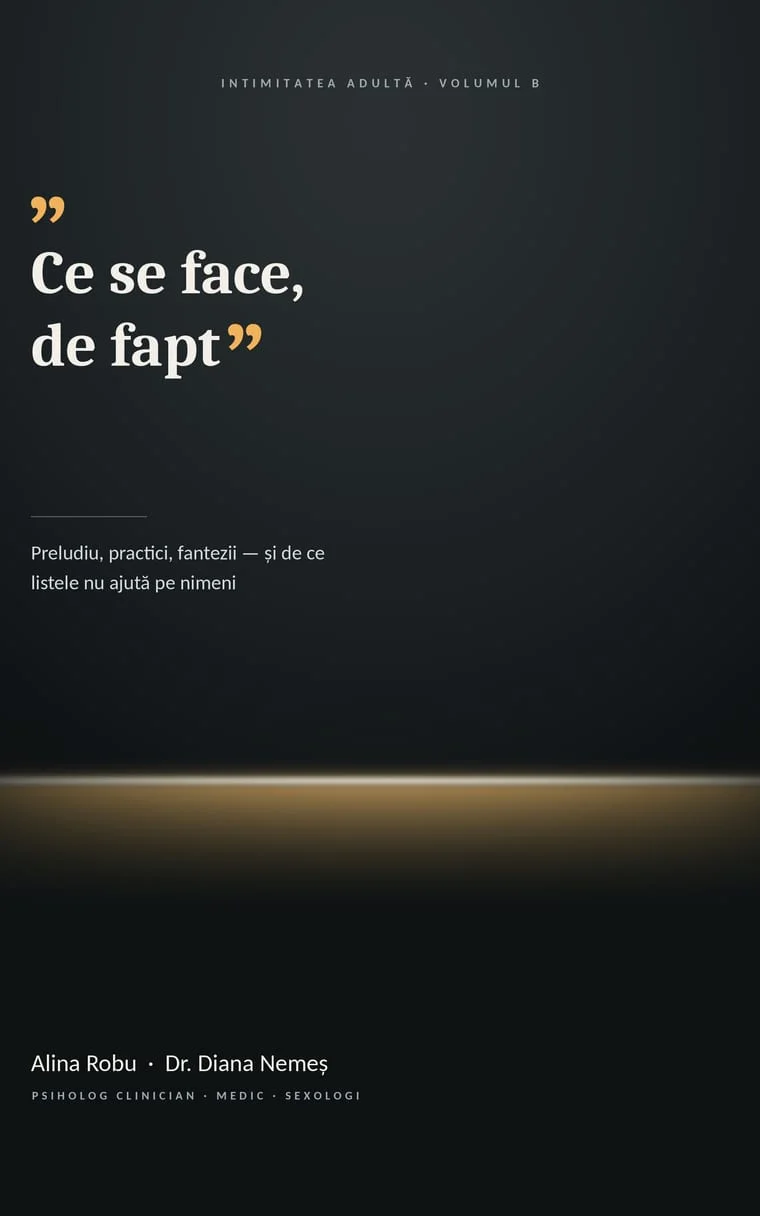
See it in the shopEight volumes about the body, boundaries and closeness
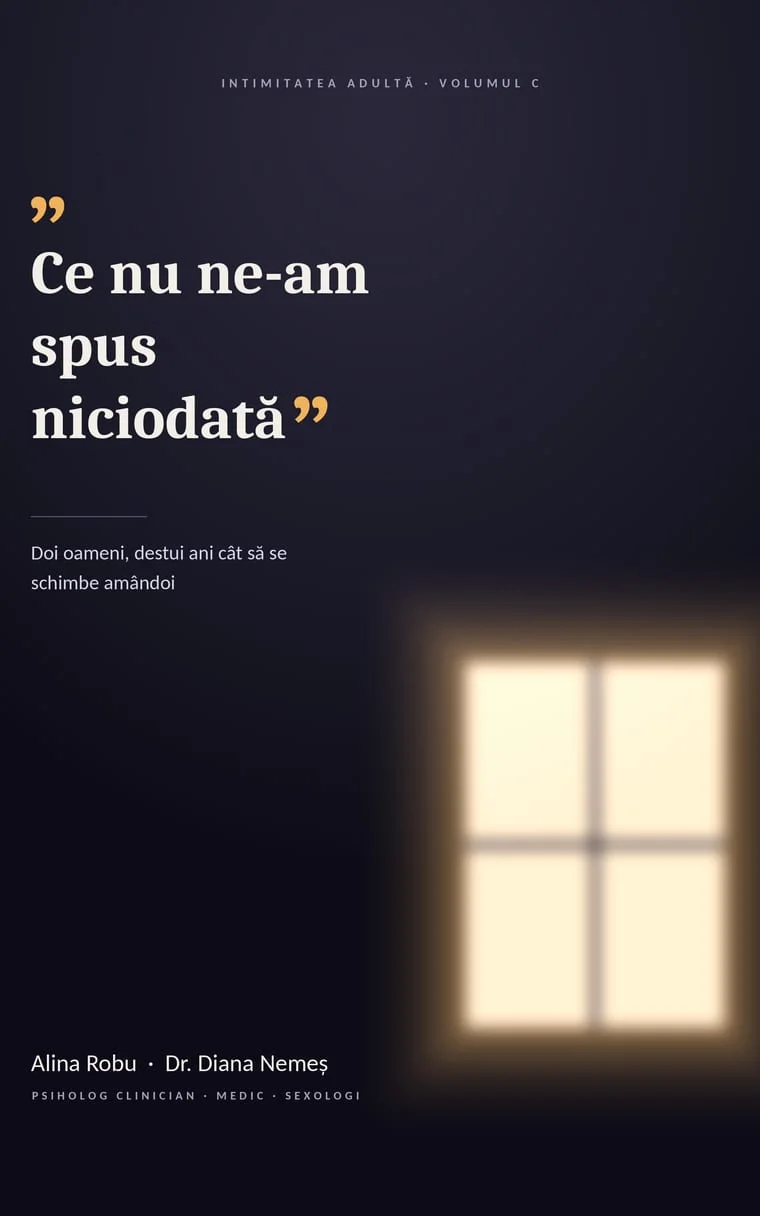
Written together with Dr. Diana Nemes: five for parents, by the child's age, and three for the adult reading them. Plus three video courses. In Romanian.
Explained so anyone can follow
Interviews, TV programmes, podcasts and articles in national publications, about the brain, anxiety, ADHD, sleep and balance.















The question you
do not ask out loud
Most questions about intimacy never reach a specialist. They get searched at night, on the internet, among contradictory answers. I specialised this site's assistant on exactly that: desire, couples, the body, shame, sexuality.
It answers you informatively, without judgement and without asking for personal details. When a question needs a human being, it tells you straight.
The conversations are informative and do not replace a consultation. For situations that call for a diagnosis or a treatment, book a session.
The first conversation is about what brings you, not about the method
You tell me what is happening, I tell you honestly whether it is something I can help with, in which field, and roughly how long it will take. If I am not the right person, I tell you who to go to.