Sexologist in Brașov and online
Specialist sexologist. Sexuality is the last subject people ask for help with and the first thing that breaks when stress, anxiety, trauma or a tired relationship enter their lives. A sexology consultation is where the question gets asked out loud and receives an adult answer, without judgement and without a joke.
What to know before you book
- Where
- Str. Crișan 13, Brașov · At the practice in Brașov, or online, on video
- Hours
- Monday - Thursday, 15:00 - 20:00
- Fee
- 1000 RON per session, individual or as a couple
- Session length
- 60 minutes
- How to book
- Pick a time in the calendar, call, or write on WhatsApp.
Most sexual difficulties do not begin in the body. They begin in a nervous system that can no longer come down from alert, in a relationship where people have stopped talking, or in a shame learned in childhood. The body only translates what was never said.
Women, men and couples come to me. Some after years of looking for a medical cause. Others with a good relationship, in which intimacy faded without a single argument. All of these are reason enough.
In short
- Specialist sexologist
- Individual and couple consultations
- Absolute confidentiality
- No judgement, no pressure, no taboos
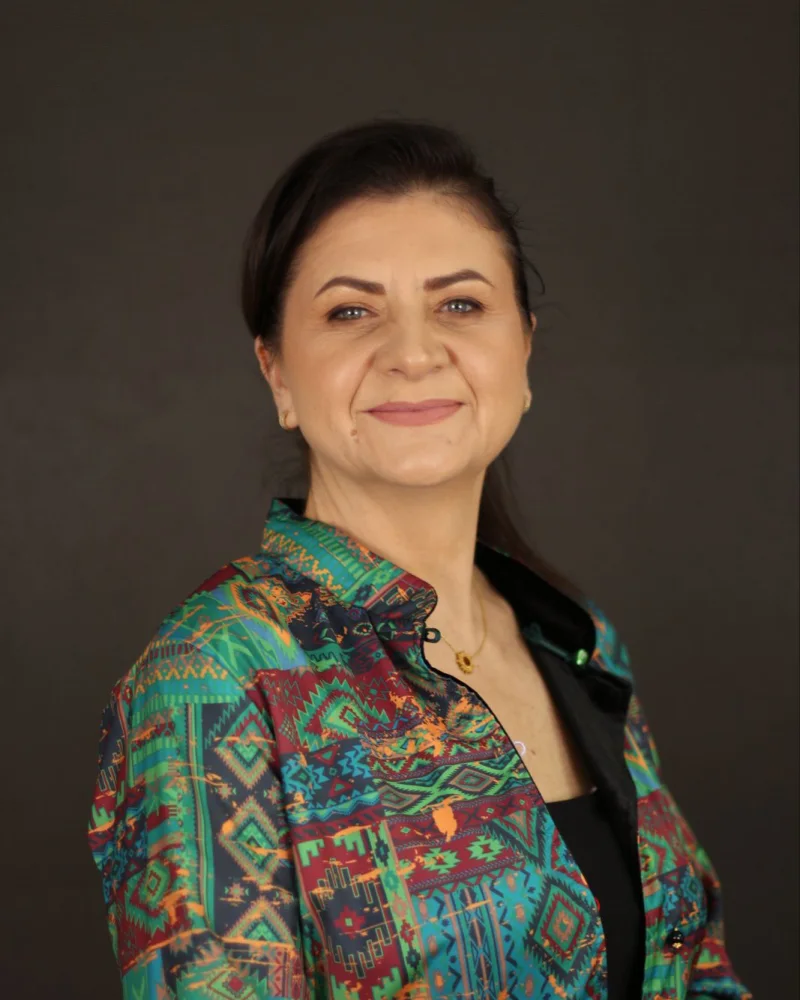
Signed: Alina Robu
I am Alina Robu — specialist sexologist, specialist clinical psychologist and specialist integrative psychotherapist, with more than 20 years of clinical practice. I am a doctoral candidate in psychology and neuroscience and co-founder of the BrainMap Institute, where the conversation in the consulting room sits next to the brain map.
In this field I wrote, together with Dr. Diana Nemes, the eight volumes of the Intimacy Academy and have published clinical studies internationally. I practise sexology as a psychologist: whatever belongs to a doctor — pain, bleeding, sudden changes — goes to the doctor first, and I say so from the first consultation.
- Specialist integrative psychotherapist
- Specialist clinical psychologist
- Specialist sexologist
- Hypnotherapist
- Neurospecialist and neurofeedback therapist, certified by IFEN Germany
- PhD candidate in psychology and neuroscience
How the work is done, so it does not stay at the level of advice
Two planes, at the same time
What is happening in your relationship and in your story, and what is happening in the regulation of your nervous system. Desire needs a brain that feels safe; without that, no technique holds.
Medical causes first
Pain, bleeding, sudden changes in libido or in erection: these are checked by a doctor before any psychological interpretation. Nothing is assumed.
Confidentiality, no exceptions
Nothing is recorded in files anyone else can access, and nothing is discussed with your partner without your consent. When you come as a couple, we agree from the start what may be said.
Four steps, in this order
The first consultation
We put the questions on the table and first rule out the causes that need a doctor. Nothing is assumed.
The map of intimacy
What changed, since when, in what context, and what part the relationship plays in what is happening now.
Work on two planes
Sex therapy proper and nervous-system regulation, so that desire has somewhere to appear.
The couple, where appropriate
Many difficulties resolve far faster when both partners come. It is not required, but it helps.
What people believe and what actually happens
| The belief | What is actually true |
|---|---|
| "If I have no desire left, it is over." | Desire is a function that depends on context and on safety. It can be reactivated. |
| "Pain is normal, it will pass." | Pain is a symptom and it gets investigated, medically first. It is not something to endure. |
| "It is a problem of attraction." | Most often it is the distance that settled in outside the bedroom: tiredness, routine, things left unsaid. |
| "I have to come with my partner." | Not necessarily. It helps and it speeds things up, but the work goes very well individually too. |
| "I must be the only one with this question." | It is much the same five questions, asked by hundreds of people who believed exactly that. |
Five beliefs people bring to the first consultation.
The table scrolls sideways.
The reasons people come to this field with
The questions women come with
Many sexology consultations are with women who come on their own. The questions repeat, and none of them is small.
Desire that has faded
Not "I have a problem" but "I don't feel anything any more and I don't know since when". Female desire is most often responsive, not spontaneous: it comes after closeness, not before. When that is not known, it reads as a defect.
Pain during intercourse
Vaginismus, dyspareunia, burning, tightening. The gynaecologist first, always. When the doctor says everything is fine and the pain stays, we work on the body's fear of being touched — and it can be worked on.
The orgasm that doesn't come
The question most often asked in a whisper. Most of the time it is not a dysfunction but a comparison with a standard from films, and a performance pressure nobody has named.
After childbirth
The body has changed, sleep has gone, the partner is waiting. Sexuality after birth has its own calendar and needs words, not haste.
At menopause
Lubrication, desire, body image. Part of it is hormonal and belongs to the doctor; part of it is about what you think you are still allowed to want — and that part is our work.
Learned shame
No sex education, religion, a family where nobody talked. Shame can be unlearned, with an adult in front of you who is surprised by nothing.
Nothing you are about to ask is strange. I have heard that question before you.
What people ask me before the first consultation
How much does a session cost and how long is it?
What happens at the first session?
Online or at the practice?
Where is the practice in Brașov?
Is it confidential?
How many sessions are needed?
Does my partner have to come too?
Should I see a doctor first?
Map of the practice
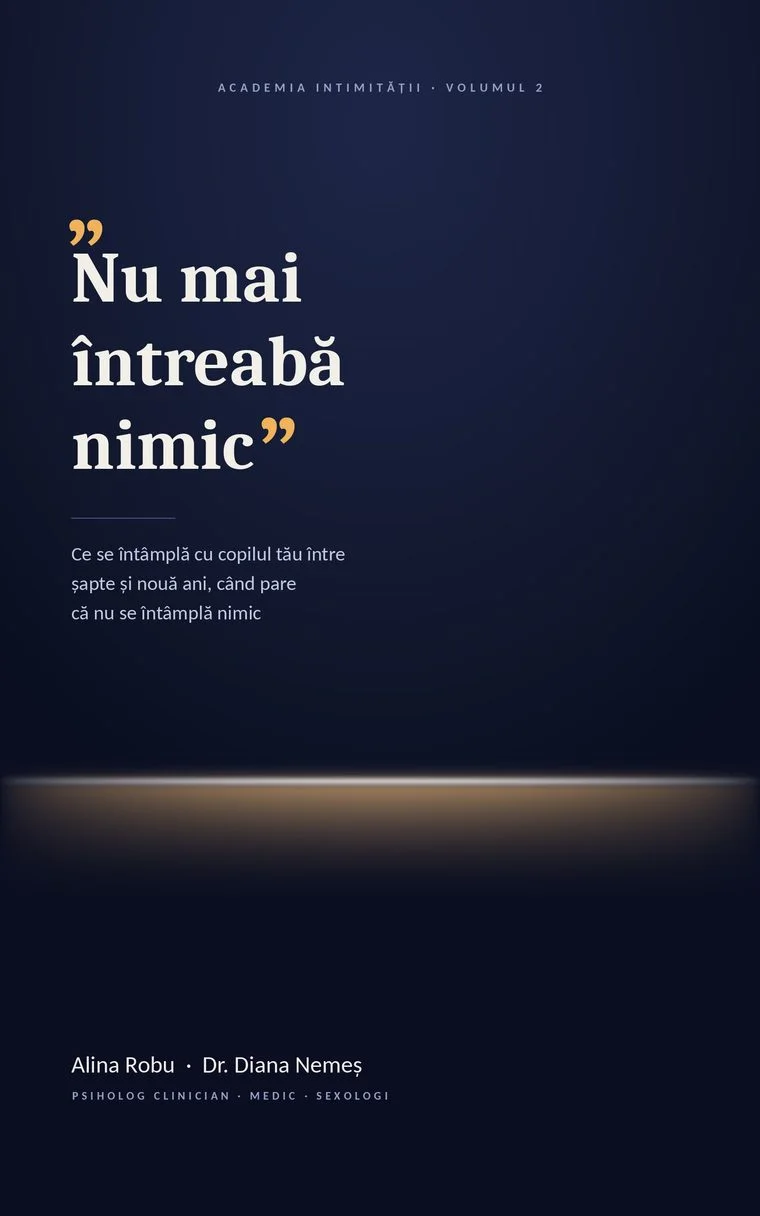
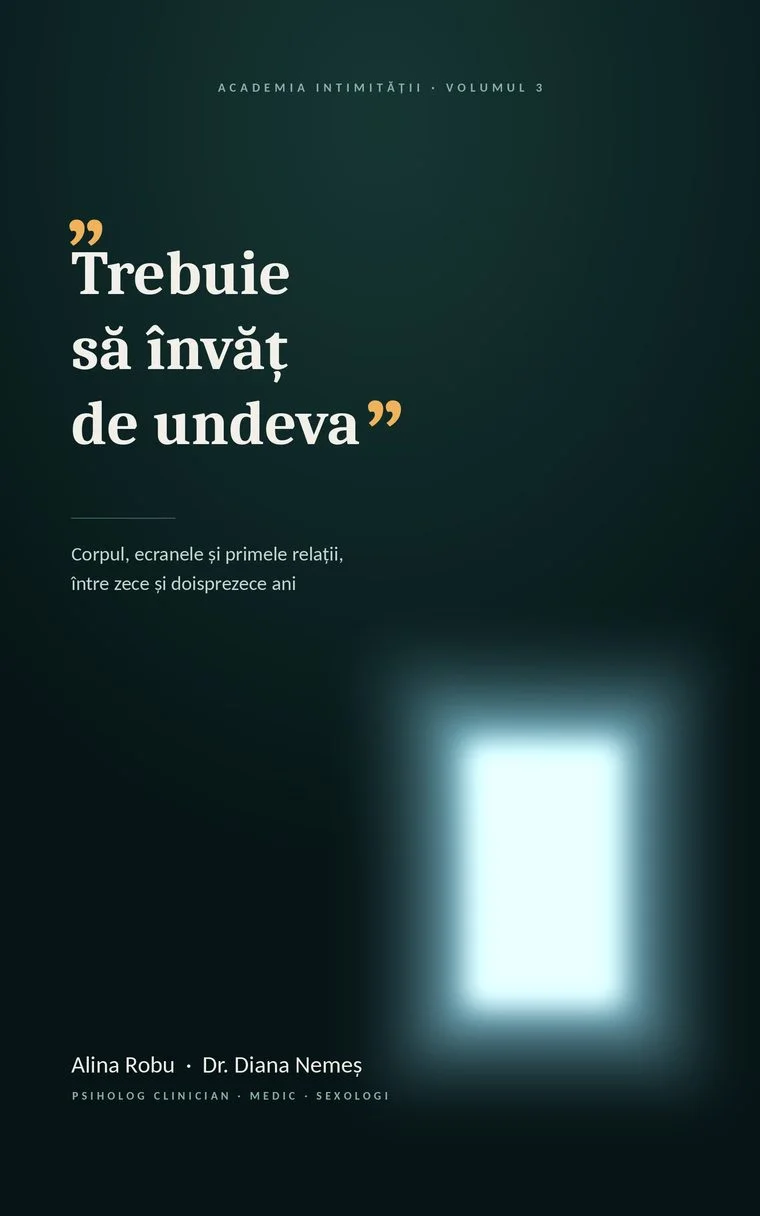
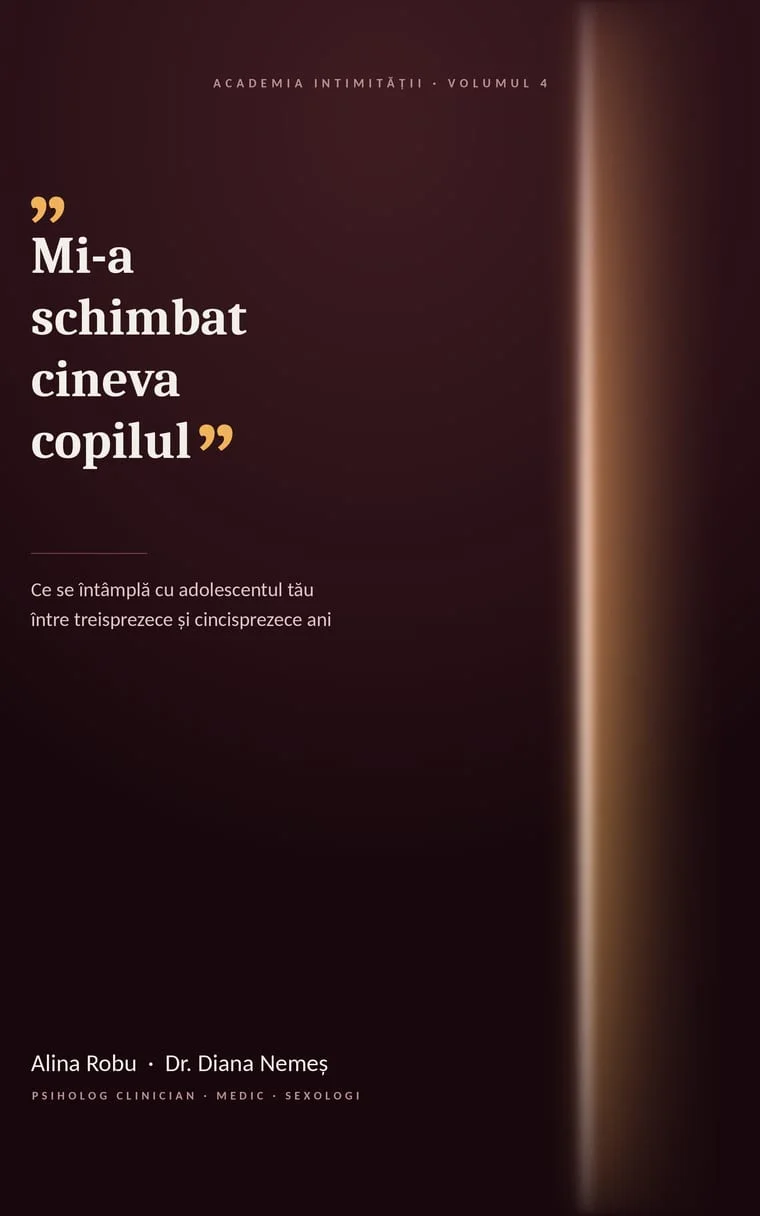
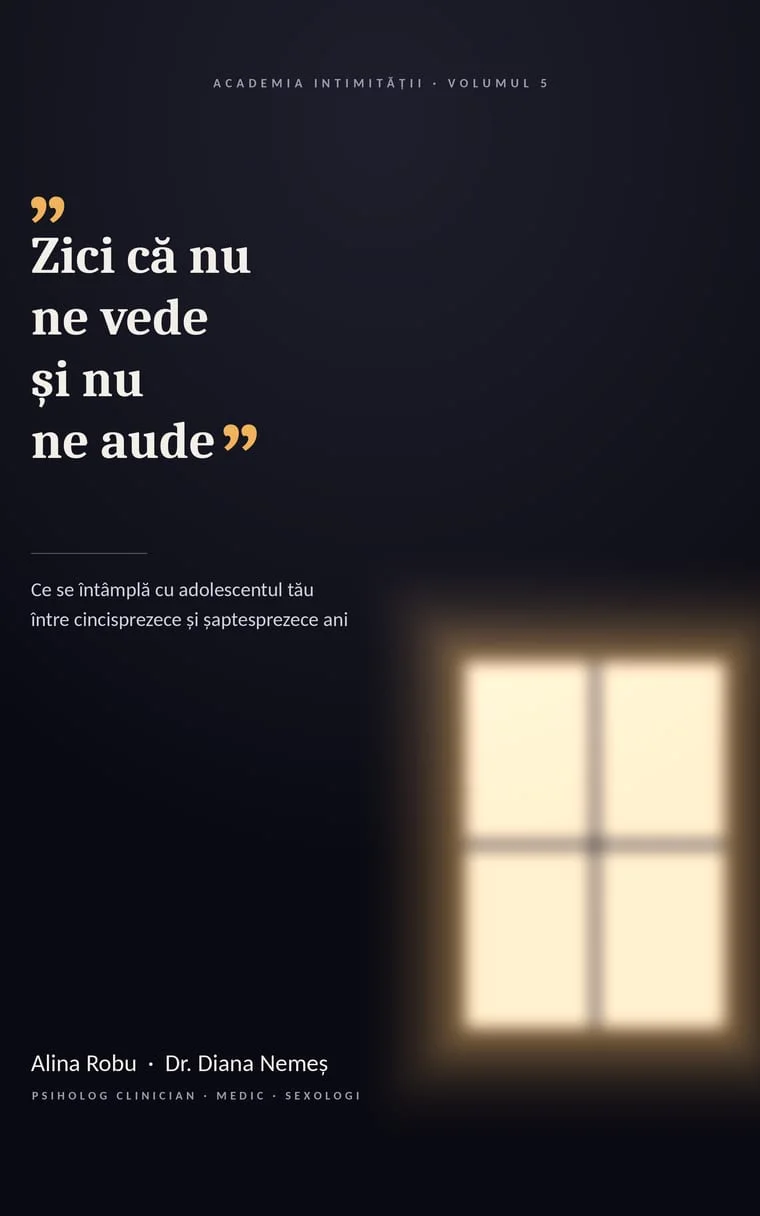
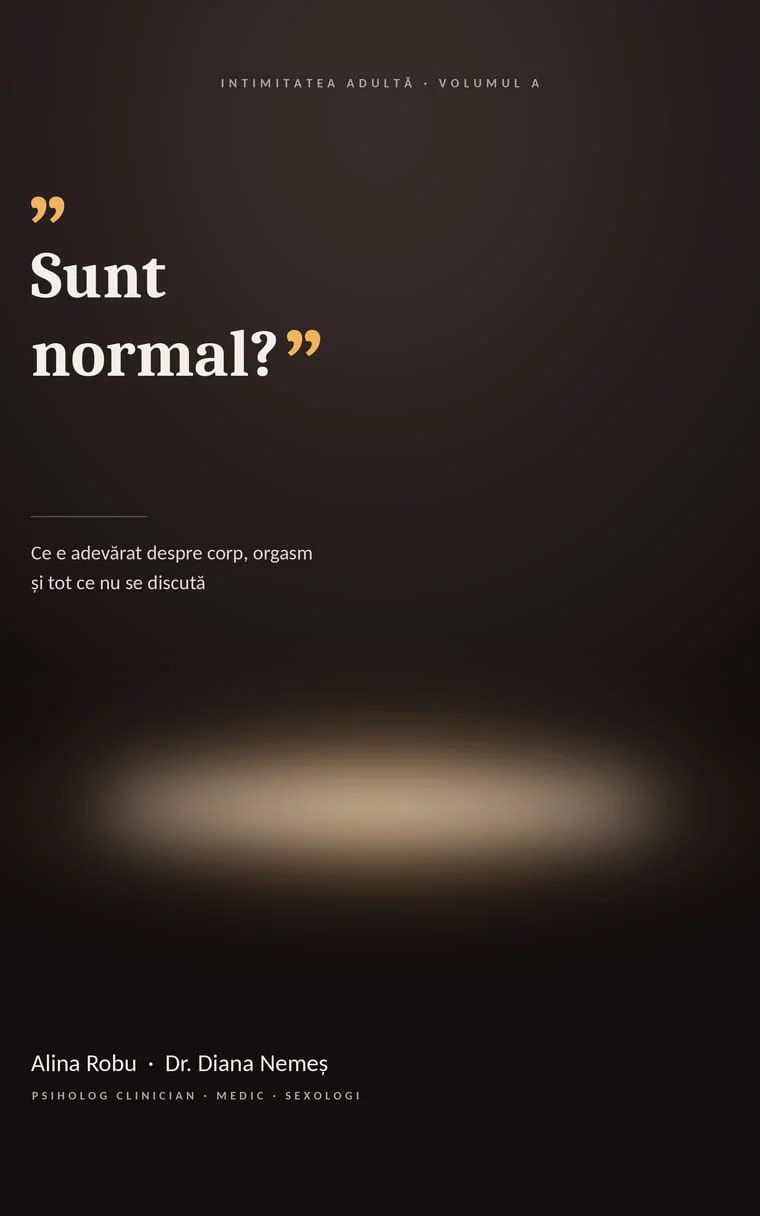
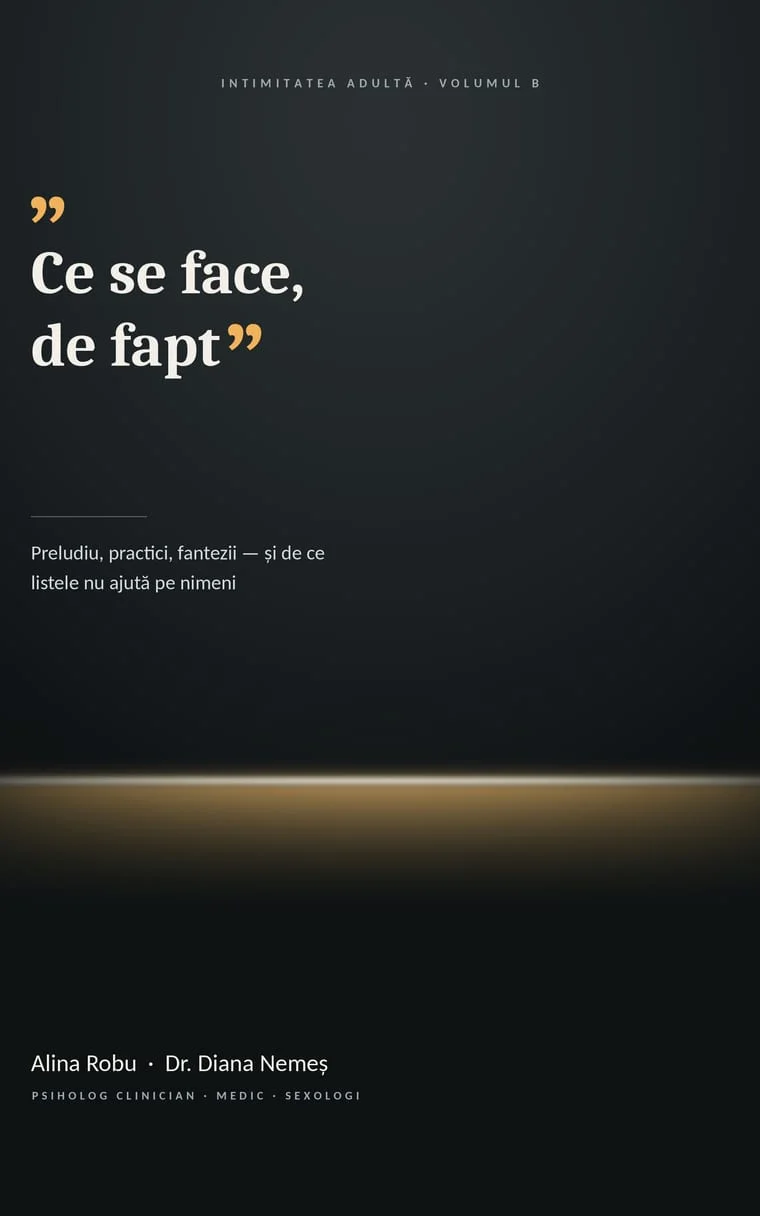
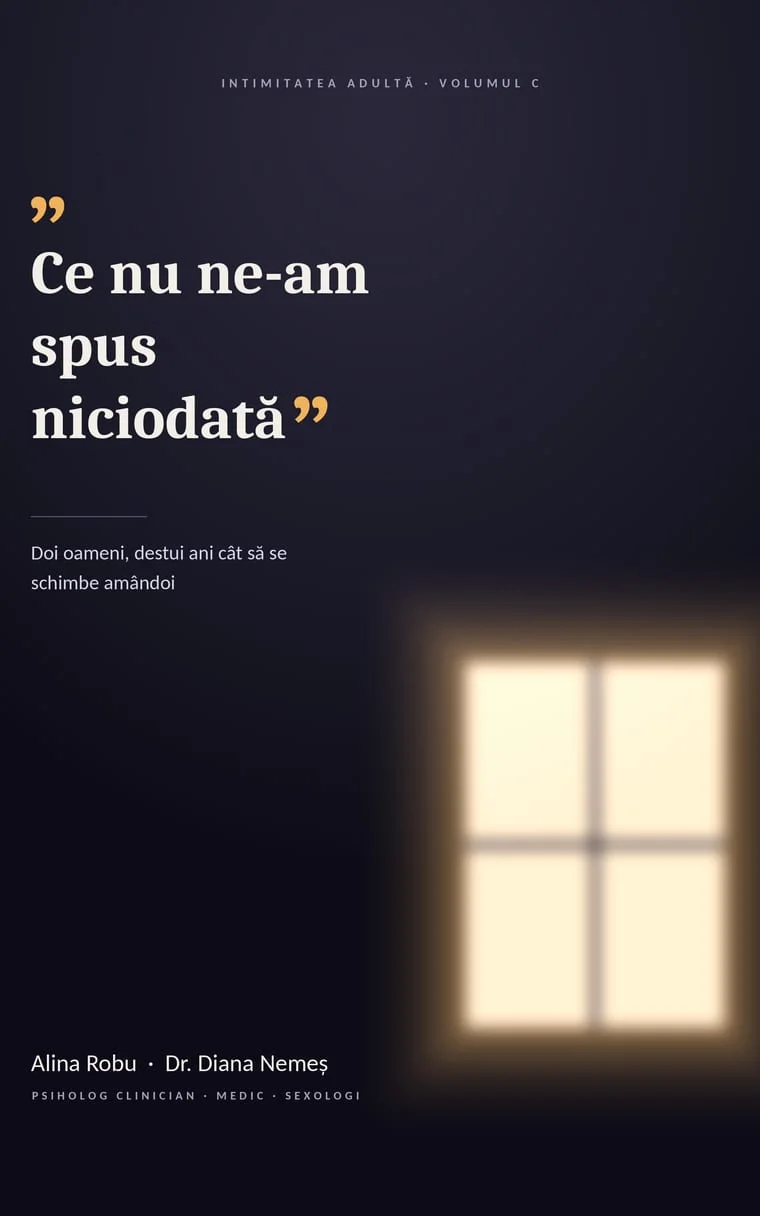
Eight volumes about the body, boundaries and closeness
Written together with Dr. Diana Nemes: five for parents, by the child's age, and three for the adult reading them. Plus three video courses. In Romanian.

Ask in writing first,
if that is easier
This site's assistant is trained on exactly the area of intimacy: desire, couples, the body, shame, sexuality. It answers informatively, without judgement, and tells you clearly when a real consultation is needed.
In the press and on air
The subjects I explain publicly, in national publications and in podcasts.



















Not sure this is the right field for you?
A first conversation clears up exactly that. You tell me what is happening, I tell you honestly which field the work belongs to and whether someone else is needed.