Integrative psychotherapy, at the practice in Brașov or online
Specialist integrative psychotherapist. Integrative psychotherapy does not pick one school and impose it on everyone. It starts from the person, from their pace and from what they need right now, then builds the path out of the instruments that fit them: work with emotion, with thought, with the body, with the life story and with the relationship.
What to know before you book
- Where
- Str. Crișan 13, Brașov · At the practice in Brașov, or online, on video
- Hours
- Monday - Thursday, 15:00 - 20:00
- Fee
- 1000 RON per session, individual or as a couple
- Session length
- 60 minutes
- How to book
- Pick a time in the calendar, call, or write on WhatsApp.
I work integratively because people do not arrive divided into chapters. Someone comes in with an anxiety that has, at the same time, a thinking component, a bodily one, a family-history one and a relational one.
Treating only one chapter means leaving the person to repair the rest alone. That is why I do not impose a school: I build the path out of the instruments that suit them.
In short
- Over 20 years of practice in psychotherapy and clinical psychology
- Integrative training, with supervision
- I work with adults, couples and adolescents
- Sessions at the practice or online
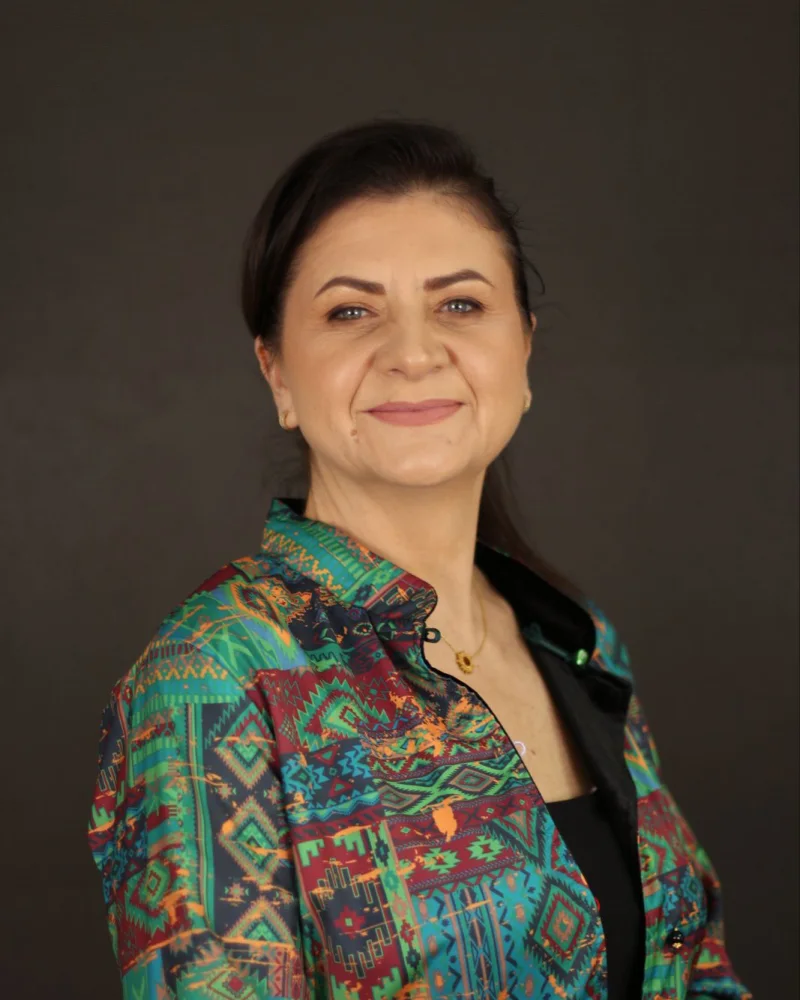
Signed: Alina Robu
I am Alina Robu — specialist integrative psychotherapist, specialist clinical psychologist and specialist sexologist, with more than 20 years of clinical practice. My integrative training was done under supervision. I am a doctoral candidate in psychology and neuroscience and co-founder of the BrainMap Institute, where the conversation in the consulting room sits, when useful, next to the brain map.
I work with adults, couples and adolescents, at the practice in Brașov and online. I do not impose one school: at the first session I tell you honestly what we would work on, with which tools and roughly how long. And if a doctor or another specialist is needed alongside me, I say so directly and refer you on.
- Specialist integrative psychotherapist
- Specialist clinical psychologist
- Specialist sexologist
- Hypnotherapist
- Neurospecialist and neurofeedback therapist, certified by IFEN Germany
- PhD candidate in psychology and neuroscience
Three things that change how therapy goes
The map before the method
The first part of the work is not therapy yet, it is clarity: what is happening, since when, against what background, what you have already tried and what helped, even a little.
Progress you can see
Every stage has a goal said out loud and a sign by which we know it has been reached. We do not work "until we feel better".
Brain data, next to the conversation
When a brain map shows an alert network permanently switched on, "why can I not calm down even though I understand everything" becomes a question with an answer. You are not lazy; you have a brain asking for something other than willpower.
Four steps, in this order
Initial assessment
Together we establish what brings you, since when, against what background, and what the concrete goal is. We do not start therapy before we know where we want to get to.
A plan with stages
Each stage has a clear purpose and a sign by which we know it has been reached. Progress is seen, not assumed.
Combined instruments
Cognitive-behavioural work, work with emotion, nervous-system regulation techniques, clinical hypnotherapy, elements of trauma therapy. Whatever helps gets used.
Anchored in data
Where it is useful, we place the qEEG brain map next to the conversation. Therapy becomes measurable, not only felt.
What brings you, what sits behind it, what we work on
| What brings you | What sits behind it | What we work on together |
|---|---|---|
| Anxiety that does not yield to arguments | A nervous system stuck on alert | Physiological regulation plus work on the anxious thought |
| Exhaustion and loss of meaning | Resources spent faster than they are rebuilt | Pace, boundaries, recovery, then direction |
| The same conflicts, with a different partner | A relationship pattern learned early | The relational history and the choices that repeat |
| Reactions out of proportion to the situation | An experience that never closed | Trauma work, in steps, safety first |
The four most frequent situations. The order of the stages is agreed in the first session.
The table scrolls sideways.
The reasons people come to this field with
Psychotherapy online, wherever you are
Some of the people I work with are not in Brașov: they are in another city, in another country, or simply cannot get to the practice at that hour. The online session is the same session, on video.
How it works
On video, 60 minutes, at the same fee as at the practice. We agree on the platform, Zoom or WhatsApp, the day before, whichever suits you. It is not a shortened version: the same questions, the same pace, the same person in front of you.
From where
From anywhere you have a signal: another city, abroad, home. For Romanians living abroad it is therapy in their own language, with a therapist from home. The hours in the calendar are Romanian time.
What you need
A place where you are alone for an hour and nobody can hear you, headphones and a stable connection. A phone works, a laptop is more comfortable. The rest is the same as at the practice.
Who it works just as well for
For most of the situations people bring to psychotherapy, online works just as well as at the practice: what matters is regularity and the relationship, not the room. Many start online and stay that way.
When the practice is better
When we want an assessment with standardised instruments, when we put the qEEG brain map next to the conversation, or when you feel you need a room where you are not at home. The two can also be combined: some sessions at the practice, others online.
When online is not the right place
In an acute crisis, when there is an immediate danger to you or to someone else, you do not wait for an appointment: call 112 or go to the nearest emergency room. Psychotherapy, online or at the practice, starts afterwards.
I am not asking you to change. I show you why you work the way you do, and from there you choose.
What people ask me before the first consultation
Is it confidential?
What is the first session like?
How many sessions are needed?
What does "integrative" mean?
Online or at the practice?
Does my partner come too?
Is it covered by health insurance?
Psychologist, psychotherapist or psychiatrist: who do I go to?
In the press and on air
The subjects I explain publicly, in national publications and in podcasts.



















Not sure this is the right field for you?
A first conversation clears up exactly that. You tell me what is happening, I tell you honestly which field the work belongs to and whether someone else is needed.